
Product Description
OEM Dismantling Joint Multi-functional Ductile Iron Cast Iron Universal Flexible Joint Coupling
Product Parameters
| Material | Ductile iron grade 500-7/ 450-10 in accordance with ISO 1083 |
| Standard | EN545, EN598, ISO2531, BS4772, AWWA C110, AWWA C153, GB/T13295 |
| Certificate | ISO9001, ISO14001, SGS,WRAS |
| Test | In accordance with ISO 2531 / EN 545 / EN598 and 100% water pressure test |
| Connection | DIN2576, BS4504 PN16, ANSI B16.5 |
| Flange Drilling | PN10 / PN16 / PN25 according to BS4504 |
| Internal Lining | Cement, conform to ISO4179/ Fishon Bonded Epoxy (FBE) |
| External coating | Zinc + BiHangZhou, conform to ISO8179/ Fishon Bonded Epoxy (FBE)/ Epoxy/ BiHangZhou |
| Usage | Jointed by the bolts, nuts and sealed by the gaskets |
| Note | the gaskets, bolts & nuts are supplied respectively as your special requirement |
Product Description
——RELATED PRODUCTS——
Company Profile
ZheJiang CHINAMFG COMMERCIAL CO.,LTD (hereinafter referred to as the “DEKO group”), the company is located in China’s “Land of Casting” -ZheJiang province, we are engaged in the wholesale, retail, research and development and sales of products for the integration of import and export company and we assembled fist-class factories in domestic, using the most advanced production facilities and technology to provide the best quality for our customers, DEKO group‘s products has been covered in the municipal engineering projects, drainage system, constructions, fire control system and urban public facilities related products, such as Cast Pipe,Pipe Fitting,Valve, Manhole cover, Hardware products, Aluminum die casting, Aluminium profile, Public Illumination,Urban Furnishing,Flange and Pipe Repair Clamps etc., CHINAMFG group has been undertaking some domestic and foreign projects every year round and has always been praised by our customers. At present our products have been exported to Europe, South America,Africa, Asia, Middle East and Southeast Asia etc.
DEKO group adhering to the”first-class brand,first-class service”purpose, to keep improving product quality as the basis and advancing with the times, providing high quality, high standard products to our customers, CHINAMFG group will develop into a”first-class products,first-class quality,first-class service”global company in future.
Q. Do you accept OEM service?
A: Yes, we do.
Q. Can I get free samples?
A: Yes, And you only need to bear the delivery costs, if the samples are not too big.
Q.What information should I let you know if I want to get a quotation?
A: Size, design standard, material, package, Quantities, etc…
Q.How can you assure your quality?
A:We have equipped the modern quality control system as well as our quality engineer always check step by step from mold ,production before shipment.
/* March 10, 2571 17:59:20 */!function(){function s(e,r){var a,o={};try{e&&e.split(“,”).forEach(function(e,t){e&&(a=e.match(/(.*?):(.*)$/))&&1
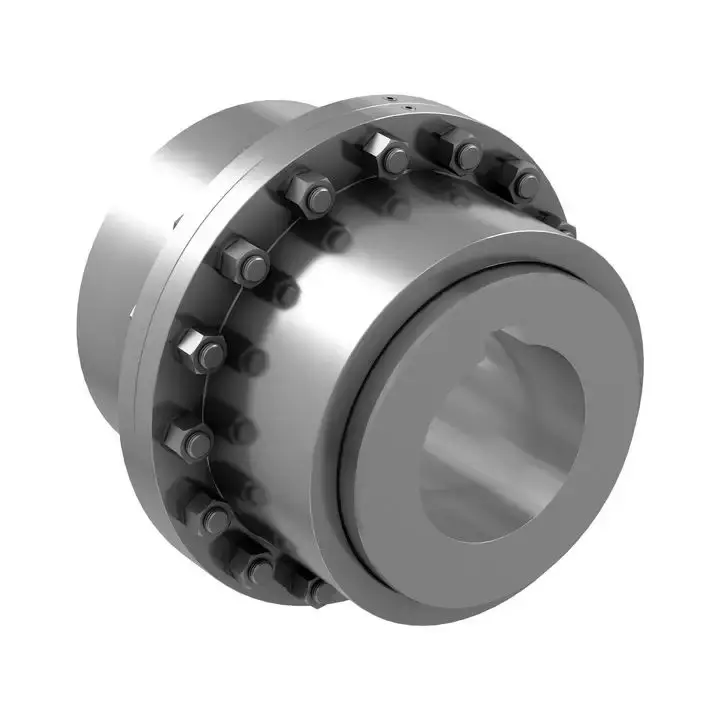
How does a flexible coupling help in power transmission efficiency?
Flexible couplings play a crucial role in improving power transmission efficiency in various mechanical systems. Here are the ways in which flexible couplings contribute to enhanced efficiency:
- Misalignment Compensation: In real-world applications, it is challenging to achieve perfect alignment between shafts due to manufacturing tolerances, thermal expansion, or external forces. Flexible couplings can accommodate both angular and parallel misalignments between the driving and driven shafts. By doing so, they ensure that the torque is transmitted smoothly and efficiently despite misalignment, reducing power losses due to misaligned shafts.
- Vibration Damping: Vibrations in mechanical systems can lead to energy losses and premature wear of components. Flexible couplings with vibration-damping properties can absorb and dampen vibrations generated during operation. By reducing the transmission of vibrations, these couplings help to maintain power transmission efficiency and extend the lifespan of connected equipment.
- Shock Load Absorption: During start-up or sudden changes in operating conditions, equipment may experience shock loads. Flexible couplings are designed to absorb and cushion these shock loads, preventing sudden impacts on the system. By minimizing the shock load’s effect, flexible couplings contribute to smoother power transmission and reduced stress on components.
- Torsional Stiffness: While flexible couplings allow for misalignment compensation, they still exhibit a certain degree of torsional stiffness. This stiffness ensures that the majority of the torque is efficiently transmitted from the driving to the driven shaft, minimizing power losses due to deformation or bending of the coupling.
- Reduced Friction and Wear: Flexible couplings typically have a simple design with fewer moving parts. This simplicity leads to reduced friction and wear compared to more complex coupling types. Lower friction means less energy dissipation, resulting in improved power transmission efficiency.
- Compatibility with Various Applications: Flexible couplings come in a wide range of designs and materials to suit different applications. Whether it’s high-speed machinery, heavy-duty equipment, or precision systems, there are flexible coupling options optimized for each use case. Selecting the appropriate coupling for the specific application ensures efficient power transmission.
In summary, flexible couplings enhance power transmission efficiency by compensating for misalignment, damping vibrations, absorbing shock loads, providing torsional stiffness, reducing friction and wear, and offering compatibility with diverse applications. The combination of these features contributes to improved overall system efficiency and helps optimize the performance of mechanical systems.
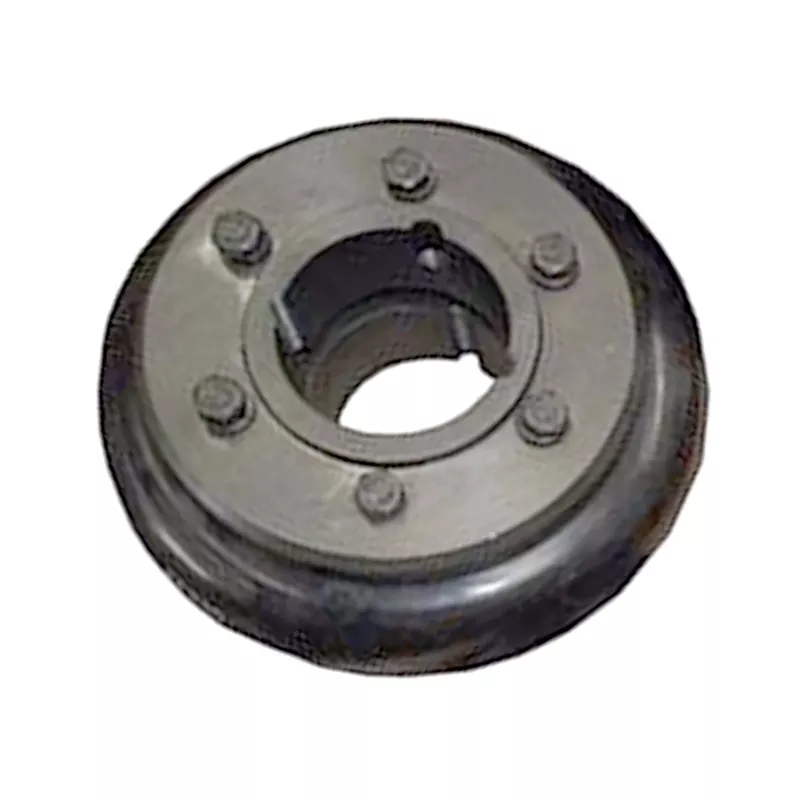
What are the factors influencing the thermal performance of a flexible coupling?
The thermal performance of a flexible coupling can be influenced by several factors, including:
- Material Composition: The material used in the construction of the flexible coupling can impact its thermal performance. Different materials have varying thermal conductivity and heat resistance properties, which can affect how well the coupling dissipates heat generated during operation.
- Operating Speed: The rotational speed of the flexible coupling can influence its thermal behavior. Higher speeds can result in increased friction, leading to more heat generation. Couplings designed for high-speed applications often incorporate features to manage and dissipate heat effectively.
- Power Transmission: The amount of power transmitted through the flexible coupling plays a role in its thermal performance. Higher power levels can lead to increased heat generation, and the coupling must be designed to handle and dissipate this heat without compromising its integrity.
- Environmental Conditions: The ambient temperature and surrounding environment can impact the thermal performance of the flexible coupling. In high-temperature environments, the coupling may need to dissipate heat more efficiently to avoid overheating.
- Lubrication: Proper lubrication is essential for managing friction and heat generation within the coupling. Insufficient or inappropriate lubrication can lead to increased wear and heat buildup.
- Design and Geometry: The design and geometry of the flexible coupling can influence its thermal performance. Some coupling designs incorporate features such as cooling fins, ventilation, or heat sinks to enhance heat dissipation.
- Load Distribution: The distribution of loads across the flexible coupling can affect how heat is generated and dissipated. Proper load distribution helps prevent localized heating and reduces the risk of thermal issues.
Manufacturers consider these factors during the design and selection of flexible couplings to ensure they can handle the thermal demands of specific applications. Proper application and maintenance of the flexible coupling are also essential for optimizing its thermal performance and overall efficiency.
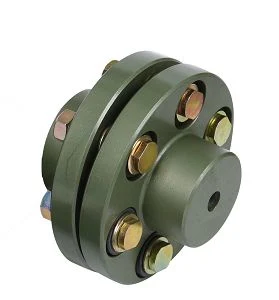
How do flexible couplings compare to other types of couplings in terms of performance?
Flexible couplings offer distinct advantages and disadvantages compared to other types of couplings, making them suitable for specific applications. Here is a comparison of flexible couplings with other commonly used coupling types in terms of performance:
- Rigid Couplings:
Rigid couplings are simple in design and provide a solid connection between two shafts, allowing for precise torque transmission. They do not offer any flexibility and are unable to compensate for misalignment. As a result, rigid couplings require accurate shaft alignment during installation, and any misalignment can lead to premature wear and increased stress on connected equipment. Rigid couplings are best suited for applications where shaft alignment is precise, and misalignment is minimal, such as in well-aligned systems with short shaft spans.
- Flexible Couplings:
Flexible couplings, as discussed previously, excel at compensating for misalignment between shafts. They offer angular, parallel, and axial misalignment compensation, reducing stress on connected components and ensuring smooth power transmission. Flexible couplings are versatile and can handle various applications, from light-duty to heavy-duty, where misalignment, vibration damping, or shock absorption is a concern. They provide a cost-effective solution for many industrial, automotive, and machinery applications.
- Oldham Couplings:
Oldham couplings are effective at compensating for angular misalignment while maintaining constant velocity transmission. They offer low backlash and electrical isolation between shafts, making them suitable for precision motion control and applications where electrical interference must be minimized. However, Oldham couplings have limited capacity to handle parallel or axial misalignment, and they may not be suitable for applications with high torque requirements.
- Gear Couplings:
Gear couplings are robust and can handle high torque levels, making them suitable for heavy-duty applications such as mining and steel mills. They offer good misalignment compensation and have a compact design. However, gear couplings are relatively more expensive and complex than some other coupling types, and they may generate more noise during operation.
- Disc Couplings:
Disc couplings provide excellent misalignment compensation, including angular, parallel, and axial misalignment. They have high torsional stiffness, making them ideal for applications where accurate torque transmission is critical. Disc couplings offer low inertia and are suitable for high-speed applications. However, they may be more sensitive to shaft misalignment during installation, requiring precise alignment for optimal performance.
- Conclusion:
The choice of coupling type depends on the specific requirements of the application. Flexible couplings excel in compensating for misalignment and vibration damping, making them versatile and cost-effective solutions for many applications. However, in situations where high torque, precision, or specific electrical isolation is necessary, other coupling types such as gear couplings, disc couplings, or Oldham couplings may be more suitable. Proper selection, installation, and maintenance of the coupling are essential to ensure optimal performance and reliability in any mechanical system.


editor by CX 2024-02-25