
Product Description
Newest High-Speed Resilient Rubber Tyre Coupling
The LLB Flexible Tyre Coupling is a kind of high elastic coupling, with good damping buffer and superior offset compensation performance.
The working temperature of 20~80 degrees Celsius, transmitting torque 10~20000NM, suitable for damp, dust, shock, vibration, reversing the changeable and frequent starting working conditions, and convenient assembly and disassembly, no lubrication, durable and reliable. Non standard couplings are made in accordance with special needs. In overloading work and half coupling, there will be no malignant accidents.
Advantages:
- Excellent absorbency;
- Disassembly;
- No lubrication;
- Easy maintenance;
- Long lasting;
LLB Type Tyre Coupling Main Dimension And Parameter
| Type | Main dimension | Number of screws Md×L |
Shaft hole diameter d dz |
Shaft hole length | Allowable Torque |
Allowable Speed |
Rotary inertia | Mass | ||
| D | D1 | H | L | Tn | (n) | kg·m2 | kg | |||
| Y J1 Z1 | N·m | r/min | ||||||||
| LLB1 | 60 | 20 | 26 | 12-M4×12 | 6-11 | 16-25 | 10 | 5000 | 0.0003 | 0.4 |
| LLB2 | 100 | 36 | 32/37 | 12-M6×18 | 10-19 | 25-42 | 50 | 5000 | 0.0035 | 1.5 |
| LLB3 | 120 | 44 | 39 | 12-M8×20 | 16-24 | 30-52 | 100 | 4000 | 0.01 | 2.2 |
| LLB4 | 140 | 50 | 45 | 12-M10×20 | 22-35 | 38-82 | 160 | 3150 | 0.571 | 3.1 |
| LLB5 | 160 | 60 | 51 | 12-M10×22 | 25-38 | 44-82 | 224 | 2800 | 0.031 | 5 |
| LLB6 | 185 | 70 | 58 | 12-M12×25 | 30-45 | 60-112 | 315 | 2500 | 0.07 | 8.1 |
| LLB7 | 220 | 85 | 68 | 12-M12×28 | 35-50 | 60-112 | 500 | 2000 | 0.15 | 13 |
| LLB8 | 265 | 110 | 82 | 12-M12×32 | 40-56 | 84-142 | 800 | 1600 | 0.30 | 22 |
| LLB9 | 310 | 120 | 106 | 12-M16×40 | 45-71 | 84-142 | 1250 | 1250 | 0.75 | 35 |
| LLB10 | 400 | 150 | 124 | 12-M20×50 | 60-85 | 107-172 | 1600 | 1800 | 2.2 | 69 |
| LLB11 | 445 | 190 | 140 | 12-M20×56 | 80-120 | 132-212 | 2250 | 1600 | 4.4 | 110 |
| LLB12 | 550 | 238 | 172 | 16-M24×71 | 100-150 | 167-252 | 5000 | 1200 | 14 | 190 |
| LLB13 | 700 | 318 | 220 | 24-M24×71 | 130-100 | 202-352 | 1000 | 1000 | 38 | 340 |
Note:Z1 type shaft hole can not be used at both ends of half couplings.
Product Show:
Our Services:
1. Design Services
Our design team has experience in tire coupling relating to product design and development. If you have any needs for your new product or wish to make further improvements, we are here to offer our support.
2. Product Services
Raw materials → Cutting → Forging →Rough machining →Shot blasting →Heat treatment →Testing →Fashioning →Cleaning→ Assembly→Packing→Shipping
3. Samples Procedure
We could develop the sample according to your requirement and amend the sample constantly to meet your need.
4. Research & Development
We usually research the new needs of the market and develop new models when there are new cars in the market.
5. Quality Control
Every step should be a special test by Professional Staff according to the standard of ISO9001 and TS16949.
FAQ
Q 1: Are you a trading company or a manufacturer?
A: We are a professional manufacturer specializing in manufacturing
various series of cardan shafts.
Q 2:Can you do OEM?
Yes, we can. We can do OEM & ODM for all the customers with customized artworks in PDF or AI format.
Q 3:How long is your delivery time?
Generally, it is 20-30 days if the goods are not in stock. It is according to quantity.
Q 4: Do you provide samples? Is it free or extra?
Yes, we could offer the sample but not for free. Actually, we have a very good price principle, when you make the bulk order the cost of the sample will be deducted.
Q 5: How long is your warranty?
A: Our Warranty is 12 months under normal circumstances.
Q 6: What is the MOQ?
A: Usually our MOQ is 1pcs.
Q 7: Do you have inspection procedures for coupling?
A:100% self-inspection before packing.
Q 8: Can I have a visit to your factory before the order?
A: Sure, welcome to visit our factory.
Q 9: What’s your payment?
A:1) T/T.
♦Contact Us
Web: huadingcoupling
Add: No.11 HangZhou Road,Chengnan park,HangZhou City,ZheJiang Province,China /* March 10, 2571 17:59:20 */!function(){function s(e,r){var a,o={};try{e&&e.split(“,”).forEach(function(e,t){e&&(a=e.match(/(.*?):(.*)$/))&&1
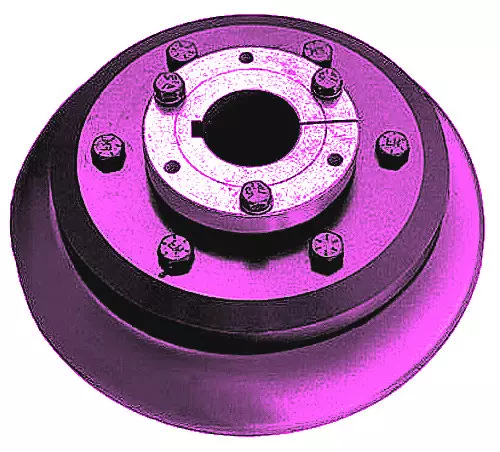
How do flexible couplings handle axial movement in rotating machinery?
Flexible couplings are designed to handle different types of misalignments in rotating machinery, including axial movement or axial misalignment. Axial movement occurs when there is displacement along the axis of rotation, causing one shaft to move closer to or away from the other shaft. Here’s how flexible couplings handle axial movement:
- Sliding Capability: Many flexible couplings, especially those with elastomeric elements or certain designs, can slide along the shafts they connect. This sliding capability allows the coupling to accommodate axial movement without introducing additional stress on the connected components. The elastomeric elements can compress or stretch slightly to absorb the axial displacement.
- Multiple-piece Designs: Some flexible couplings consist of multiple pieces, which allow for axial movement. These designs often have a floating member or a spacer that separates the two shaft-connected components. The floating member can move axially as needed, while still transmitting torque and compensating for other misalignments.
- Double-Cardanic Design: Certain high-performance flexible couplings use a double-cardanic design, allowing for misalignment in multiple directions, including axial movement. This design features two sets of flexible elements that work together to accommodate different misalignments and provide a high degree of flexibility.
It’s important to note that while flexible couplings can handle a certain degree of axial movement, excessive axial misalignment might require a different type of coupling or additional measures to be addressed properly.
During the selection and installation process, it’s essential to consider the application’s axial movement requirements and choose a flexible coupling that can accommodate the expected axial displacement while still providing the desired performance, such as vibration damping, shock absorption, or precision motion control.
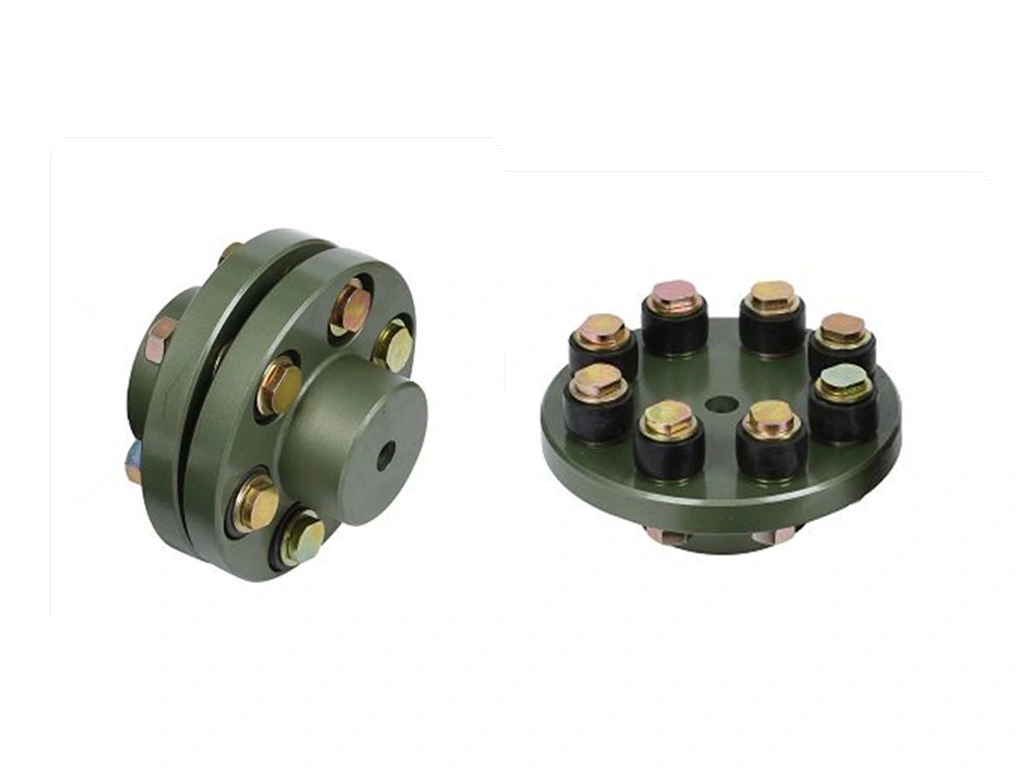
How does a flexible coupling handle alignment issues in long-distance shaft connections?
In long-distance shaft connections, it is common to encounter alignment issues due to factors such as thermal expansion, foundation settlement, or machinery shifts. Flexible couplings play a crucial role in handling these alignment issues and ensuring efficient power transmission. Here’s how they achieve this:
- Misalignment Compensation: Flexible couplings are designed to accommodate both angular and parallel misalignments between shafts. When the shafts are not perfectly aligned, the flexibility of the coupling allows it to bend or flex, reducing the transmission of misalignment forces to connected equipment.
- Reduced Stress on Equipment: By absorbing and compensating for misalignment, flexible couplings reduce the stress and loads imposed on connected machinery. This feature is particularly important in long-distance shaft connections, where misalignment can be more pronounced.
- Torsional Flexibility: In addition to angular and parallel misalignments, long-distance shaft connections may also experience torsional misalignment. Flexible couplings can handle torsional flexibility, allowing smooth torque transmission even if the connected shafts have slightly different rotational speeds.
- Vibration Damping: Long-distance shaft connections can be susceptible to vibrations due to the extended span and potential resonance. Flexible couplings help dampen these vibrations, protecting the connected equipment from excessive wear and fatigue.
- Resilience to Shock Loads: Long-distance shaft connections in industrial settings may experience shock loads due to sudden starts, stops, or equipment malfunctions. Flexible couplings can absorb and dissipate some of these shock loads, safeguarding the connected components.
- Longevity: By mitigating the effects of misalignment, vibrations, and shock loads, flexible couplings contribute to the longevity of the connected equipment and reduce maintenance and replacement costs over time.
When selecting a flexible coupling for long-distance shaft connections, it is essential to consider factors such as the degree of misalignment, torque requirements, operating conditions, and the environment in which the coupling will be used. Regular inspection and maintenance of the flexible coupling can further enhance its performance and ensure reliable operation in long-distance shaft connections.
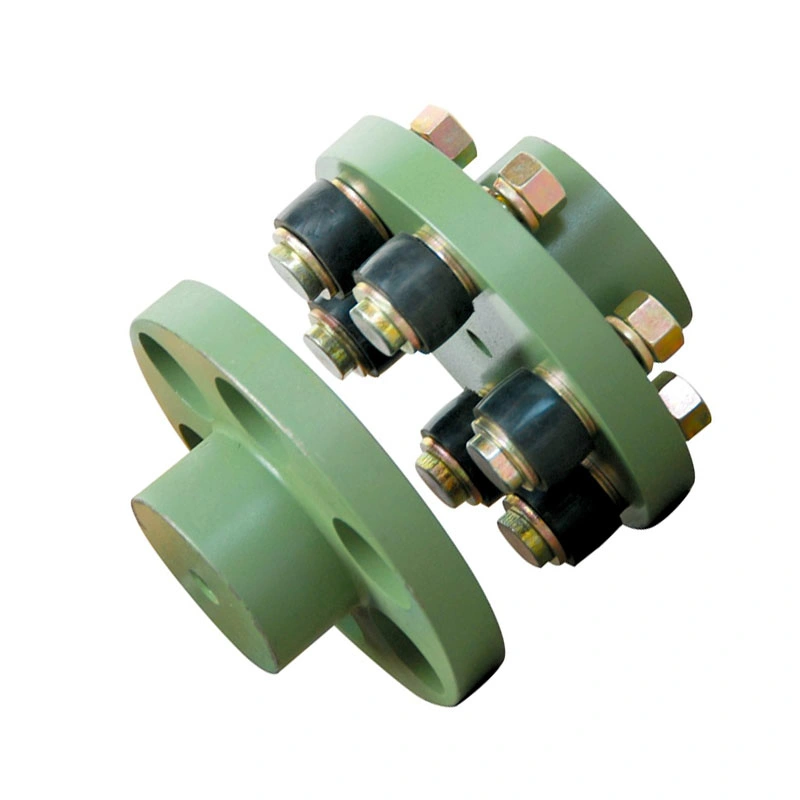
How does a flexible coupling affect the noise and vibration levels in a mechanical system?
A flexible coupling plays a crucial role in controlling noise and vibration levels in a mechanical system. It can significantly impact the overall smoothness and quietness of the system’s operation, contributing to enhanced performance and reduced wear on connected components.
Noise Reduction:
Flexible couplings help reduce noise in a mechanical system through their inherent ability to dampen vibrations. When the shafts of rotating machinery are not perfectly aligned, it can lead to vibrations that are transmitted throughout the system, resulting in noise generation. The elastomeric or flexible element of the coupling acts as a vibration dampener, absorbing and dissipating these vibrations. As a result, the noise levels in the system are reduced, creating a quieter operating environment.
Vibration Damping:
Vibrations in a mechanical system can lead to increased wear and tear on critical components, such as bearings, seals, and gears. Excessive vibrations can also cause resonance and damage to the system over time. Flexible couplings can effectively dampen vibrations by acting as a buffer between the driving and driven shafts. The flexible element absorbs the shock and vibrations, preventing them from propagating to other parts of the system. This vibration damping capability not only reduces noise but also protects the system from potential mechanical failures, extending the lifespan of the equipment.
Alignment Compensation:
Misalignment between shafts is a common cause of vibration and noise in rotating machinery. Flexible couplings excel at compensating for both angular and parallel misalignment. By accommodating misalignment, the coupling reduces the forces acting on the shafts and minimizes the generation of vibrations and noise. Proper alignment through the use of a flexible coupling ensures that the system operates smoothly and quietly.
Effect on Equipment Reliability:
Reducing noise and vibration levels has a positive impact on the reliability of connected equipment. Lower vibrations mean less stress on bearings and other rotating components, leading to extended component life and reduced maintenance requirements. A quieter operating environment can also be essential for certain applications, such as in laboratories or precision manufacturing processes, where excessive noise can interfere with delicate tasks or measurements.
Applications:
Flexible couplings find application in a wide range of industries, such as manufacturing, power generation, material handling, automotive, aerospace, and robotics. They are commonly used in pumps, compressors, fans, conveyors, and other rotating machinery where noise and vibration control are critical for smooth and reliable operation.
Summary:
A flexible coupling’s ability to reduce noise and dampen vibrations makes it an essential component in mechanical systems. By compensating for misalignment and providing vibration dampening properties, the flexible coupling enhances the overall system performance, reduces noise levels, and protects connected equipment from excessive wear and mechanical failures. Choosing the right type of flexible coupling based on the specific application requirements can have a significant impact on noise reduction and vibration control in the mechanical system.


editor by CX 2024-02-15