
Product Description
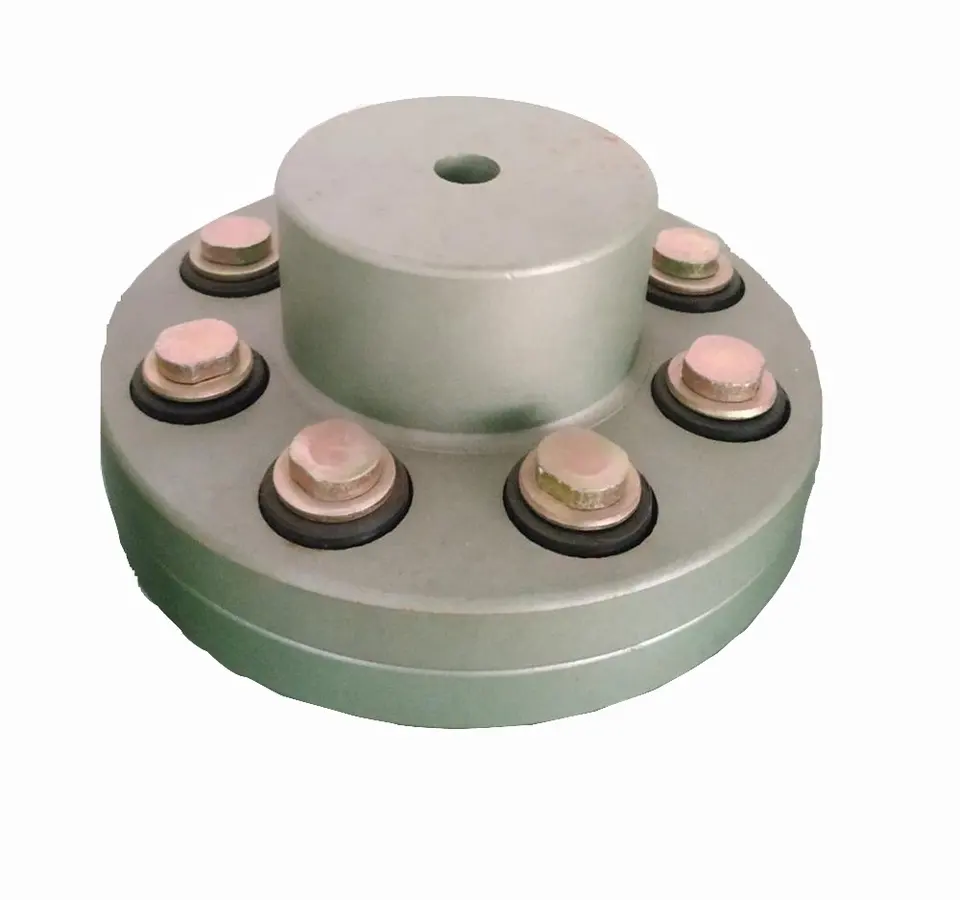
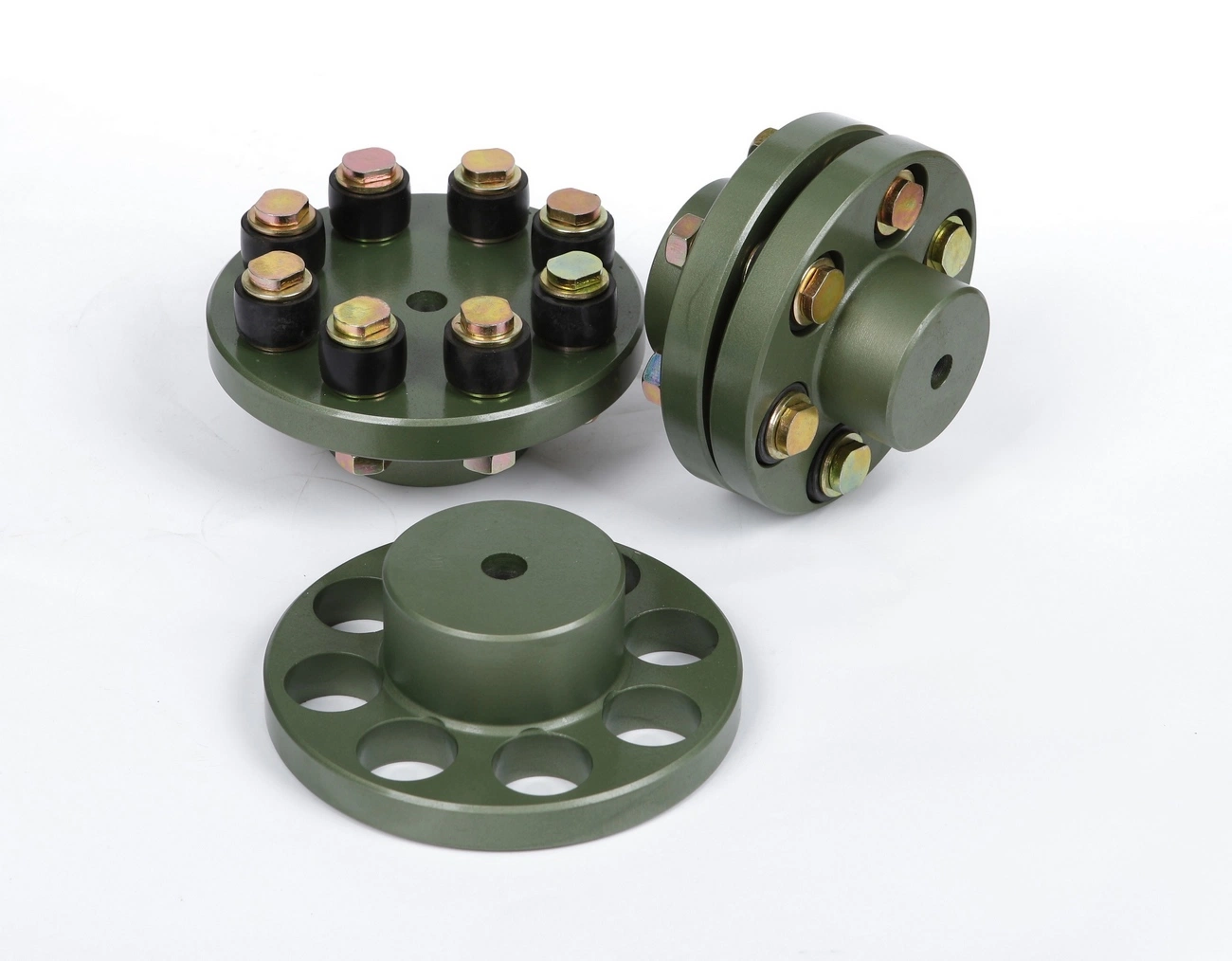
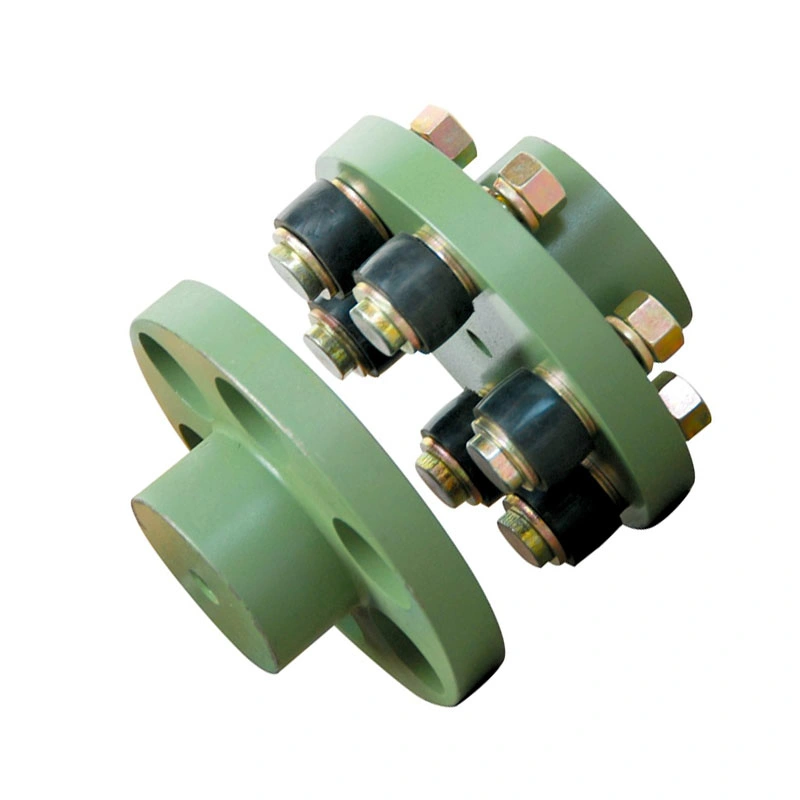
XL Types High-Pressure Rubber Flexible Spider Jaw Coupling
XL Type Flexible Spider Jaw Coupling comprises a convex claw block that can be avoided due to external constraints, internal deformation, and centrifugal impact deformation; in concave-convex claw, the pressure on the surface of the involute tooth is very small, even under overload, the tooth will not wear or deformation.
Flexible jaw couplings are used in power transmission of industrial equipment such as metallurgy, mining, lifting, transportation, petroleum, chemical industry, shipbuilding, textile, light industry, agricultural machinery, and industrial equipment such as pumps, fans, compressors, machine tools, gearboxes, mixers, printing machines, and conveyors.
Advantage:
Run smoothly;
Easy to install;
Compensate displacement (axial, radial, angular);
XL Star Type Flexible Coupling Main Dimension:
| Type | Nominal torque Tn/N·m |
Shaft hole diameter | L | D | D1 | B1 | S | |
| d1,d2 | Y | J1,Z1 | ||||||
| XL1 | 20 | 6,7 | 18 | – | 40 | 32 | 12 | 2 |
| 8,9 | 22 | – | ||||||
| 10,11 | 25 | 22 | ||||||
| 12,14 | 32 | 27 | ||||||
| 16,18,19 | 42 | 30 | ||||||
| XL2 | 71 | 8,9 | 22 | – | 55 | 40 | 14 | |
| 10,11 | 25 | 22 | ||||||
| 12,14 | 32 | 27 | ||||||
| 16,18,19 | 42 | 30 | ||||||
| 20,22,24 | 52 | 38 | ||||||
| XL3 | 200 | 10,11 | 25 | 22 | 65 | 48 | 15 | 2.5 |
| 12,14 | 32 | 27 | ||||||
| 16,18,19 | 42 | 30 | ||||||
| 20,22,24 | 52 | 38 | ||||||
| 25,28 | 62 | 44 | ||||||
| XL4 | 400 | 12,14 | 32 | 27 | 80 | 66 | 18 | 3 |
| 16,18,19 | 42 | 30 | ||||||
| 20,22,24 | 52 | 38 | ||||||
| 25,28 | 62 | 44 | ||||||
| 30,32,35,38 | 82 | 60 | ||||||
| XL5 | 560 | 14 | 32 | 27 | 95 | 75 | 20 | |
| 16,18,19 | 42 | 30 | ||||||
| 20,22,24 | 52 | 38 | ||||||
| 25,28 | 62 | 44 | ||||||
| 30,32,35,38 | 82 | 60 | ||||||
| 40,42 | 112 | 84 | ||||||
| XL6 | 630 | 16,18,19 | 42 | 30 | 105 | 85 | 21 | 3.5 |
| 20,22,24 | 52 | 38 | ||||||
| 25,28 | 62 | 44 | ||||||
| 30,32,35,38 | 82 | 60 | ||||||
| 40,42,45,48 | 112 | 84 | ||||||
| XL7 | 800 | 20,22,24 | 52 | 38 | 120 | 98 | 22 | 4 |
| 25,28 | 62 | 44 | ||||||
| 30,32,35,38 | 82 | 60 | ||||||
| 40,42,45,48,50,55 | 112 | 84 | ||||||
| XL8 | 900 | 22,24 | 52 | 38 | 135 | 115 | 26 | 4.5 |
| 25,28 | 62 | 44 | ||||||
| 30,32,35,38 | 82 | 60 | ||||||
| 40,42,45,48,50,55 | 112 | 84 | ||||||
| 60,63,65 | 142 | 107 | ||||||
| XL9 | 2000 | 30,32,35,38 | 82 | 60 | 160 | 135 | 30 | 5 |
| 40,42,45,48,50,55,56 | 112 | 84 | ||||||
| 60,63,65,70,71,75 | 142 | 107 | ||||||
| XL10 | 5000 | 40,42,45,48,50,55,56 | 112 | 84 | 200 | 160 | 34 | 5.5 |
| 60,63,65,70,71,75 | 142 | 107 | ||||||
| 80,85,90 | 172 | 132 | ||||||
| XL11 | 7100 | 50,55,56 | 112 | 84 | 225 | 180 | 38 | 6 |
| 60,63,65,70,71,75 | 142 | 107 | ||||||
| 80,85,90,95 | 172 | 132 | ||||||
| 100 | 212 | 167 | ||||||
| XL12 | 8000 | 60,63,65,70,71,75 | 142 | 107 | 255 | 200 | 42 | 6.5 |
| 80,85,90,95 | 172 | 132 | ||||||
| 100,110 | 212 | 167 | ||||||
| XL13 | 10000 | 60,63,65,70,71,75 | 142 | 107 | 290 | 230 | 46 | 7 |
| 80,85,90,95 | 172 | 132 | ||||||
| 100,110,120,125 | 212 | 167 | ||||||
| XL14 | 14000 | 60,63,65,70,71,75 | 142 | 107 | 320 | 255 | 50 | 7.5 |
| 80,85,90,95 | 172 | 132 | ||||||
| 100,110,120,125 | 212 | 167 | ||||||
| 130,140 | 252 | 202 | ||||||
| XL15 | 20000 | 80,85,90,95 | 172 | 132 | 370 | 290 | 57 | 9 |
| 100,110,120,125 | 212 | 167 | ||||||
| 130,140,150 | 252 | 202 | ||||||
| 160 | 302 | 242 | ||||||
| XL16 | 25000 | 85,90,95 | 172 | 132 | 420 | 325 | 64 | 10.5 |
| 100,110,120,125 | 212 | 167 | ||||||
| 130,140,150 | 252 | 202 | ||||||
| 160,170,180 | 302 | 242 |
Product Show:
♦Other Products List
| Transmission Machinery Parts Name |
Model |
| Universal Coupling | WS, WSD, WSP |
| Cardan Shaft | SWC, SWP, SWZ |
| Tooth Coupling | CL, CLZ, GCLD, GIICL, GICL, NGCL, GGCL, GCLK |
| Disc Coupling | JMI, JMIJ, JMII, JMIIJ |
| High Flexible Coupling | LM |
| Chain Coupling | GL |
| Jaw Coupling | LT |
| Grid Coupling | JS |
♦Our Company
Our company supplies different kinds of products. High quality and reasonable price. We stick to the principle of “quality first, service first, continuous improvement and innovation to meet the customers” for the management and “zero defect, zero complaints” as the quality objective. To perfect our service, we provide products of good quality at a reasonable price.
Welcome to customize products from our factory and please provide your design drawings or contact us if you need other requirements.
♦Our Services
1. Design Services
Our design team has experience in coupling relating to product design and development. If you have any needs for your new product or wish to make further improvements, we are here to offer our support.
2. Product Services
raw materials → Cutting → Forging →Rough machining →Shot blasting →Heat treatment →Testing →Fashioning →Cleaning→ Assembly→Packing→Shipping
3. Samples Procedure
We could develop the sample according to your requirement and amend the sample constantly to meet your need.
4. Research & Development
We usually research the new needs of the market and develop new models when there are new cars in the market.
5. Quality Control
Every step should be a special test by Professional Staff according to the standard of ISO9001 and TS16949.
♦FAQ
Q 1: Are you a trading company or a manufacturer?
A: We are a professional manufacturer specializing in manufacturing
various series of couplings.
Q 2:Can you do OEM?
Yes, we can. We can do OEM & ODM for all the customers with customized artwork in PDF or AI format.
Q 3:How long is your delivery time?
Generally, it is 20-30 days if the goods are not in stock. It is according to quantity.
Q 4: Do you provide samples? Is it free or extra?
Yes, we could offer the sample but not for free. Actually, we have an excellent price principle, when you make the bulk order then the cost of the sample will be deducted.
Q 5: How extended is your warranty?
A: Our Warranty is 12 months under normal circumstances.
Q 6: What is the MOQ?
A: Usually our MOQ is 1pcs.
Q 7: Do you have inspection procedures for coupling?
A:100% self-inspection before packing.
Q 8: Can I have a visit to your factory before the order?
A: Sure, welcome to visit our factory.
Q 9: What’s your payment?
A:1) T/T.
♦Contact Us
Web: huadingcoupling
Add: No.11 HangZhou Road,Chengnan park,HangZhou City,ZheJiang Province,China
/* March 10, 2571 17:59:20 */!function(){function s(e,r){var a,o={};try{e&&e.split(“,”).forEach(function(e,t){e&&(a=e.match(/(.*?):(.*)$/))&&1
Can flexible couplings be used in heavy-duty applications such as mining and construction?
Yes, flexible couplings can be used in heavy-duty applications such as mining and construction, where the equipment operates under challenging conditions and encounters high loads, vibrations, and misalignments. Flexible couplings offer several advantages that make them suitable for these demanding environments:
- Misalignment Compensation: Heavy-duty equipment in mining and construction may experience misalignment due to the rough terrain, uneven surfaces, or heavy loads. Flexible couplings can handle both angular and parallel misalignment, ensuring smooth power transmission even in these adverse conditions.
- Shock and Vibration Absorption: Mining and construction operations often involve high-impact loads and vibrations. Flexible couplings can dampen and absorb these shocks, protecting the connected components from damage and reducing wear and tear on the equipment.
- Torsional Stiffness: While flexible couplings are designed to accommodate misalignment, they still maintain a certain level of torsional stiffness to transmit torque efficiently. This is crucial in heavy-duty applications, where high torque is required to drive the machinery.
- Corrosion and Contamination Resistance: In mining and construction environments, equipment may be exposed to dust, dirt, water, and chemicals. Flexible couplings made from corrosion-resistant materials can withstand these harsh conditions, ensuring reliable performance and longevity.
- High Torque Transmission: Heavy-duty machinery often requires high torque transmission between the driving and driven components. Flexible couplings are capable of transmitting high torque efficiently, which is essential for the operation of large-scale equipment.
- Reduced Downtime: The robustness and reliability of flexible couplings in heavy-duty applications contribute to reduced downtime. By minimizing the impact of misalignment, shocks, and vibrations, flexible couplings help prevent unexpected breakdowns and maintenance issues.
When selecting a flexible coupling for heavy-duty applications, it’s important to consider the specific requirements of the machinery and the operating conditions. Factors such as the type of equipment, torque and speed requirements, environmental conditions, and expected loads should be taken into account.
Overall, flexible couplings are a versatile solution for power transmission in heavy-duty applications, providing the necessary flexibility, durability, and performance to withstand the challenges posed by the mining and construction industries.
What are the differences between flexible couplings and rigid couplings in terms of performance?
Flexible couplings and rigid couplings are two distinct types of couplings used in mechanical systems, and they differ significantly in terms of performance and applications.
- Torsional Flexibility: The primary difference between flexible and rigid couplings lies in their ability to handle misalignments and torsional flexibility. Flexible couplings are designed with elements, such as elastomeric inserts or metal bellows, that can deform or twist to accommodate shaft misalignments, angular offsets, and axial movements. On the other hand, rigid couplings do not have any flexibility and maintain a fixed connection between the shafts, which means they cannot compensate for misalignment.
- Misalignment Compensation: Flexible couplings can absorb and mitigate misalignment between shafts, reducing stress and wear on connected components. In contrast, rigid couplings require precise alignment during installation, and any misalignment can lead to increased loads on the shafts and bearings, potentially leading to premature failure.
- Vibration Damping: Flexible couplings, especially those with elastomeric elements, offer damping properties that can absorb and dissipate vibrations. This damping capability reduces the transmission of vibrations and shocks through the drivetrain, improving the overall system performance and protecting connected equipment. Rigid couplings, being solid and without damping elements, do not provide this vibration damping effect.
- Backlash: Flexible couplings can have some degree of backlash due to their flexibility, particularly in certain designs. Backlash is the play or free movement between connected shafts. In contrast, rigid couplings have minimal or no backlash, providing a more precise and immediate response to changes in rotational direction.
- Torque Transmission: Rigid couplings are more efficient in transmitting torque since they do not have any flexible elements that can absorb some torque. Flexible couplings, while capable of transmitting substantial torque, may experience some power loss due to the deformation of their flexible components.
- Applications: Flexible couplings are widely used in applications that require misalignment compensation, damping, and shock absorption, such as pumps, motors, and industrial machinery. On the other hand, rigid couplings are used in situations where precise alignment is critical, such as connecting shafts of well-aligned components or shafts that require synchronous operation, like in some encoder applications.
In summary, flexible couplings excel in applications where misalignment compensation, vibration damping, and shock absorption are required. They are more forgiving in terms of alignment errors and can accommodate dynamic loads. Rigid couplings, on the other hand, are used in situations where precise alignment and zero backlash are essential, ensuring direct and immediate power transmission between shafts.
How does a flexible coupling protect connected equipment from shock loads and vibrations?
Flexible couplings play a crucial role in protecting connected equipment from shock loads and vibrations by providing damping and isolation capabilities. When machines or mechanical systems experience sudden shock loads or vibrations, the flexible coupling acts as a buffer, absorbing and dissipating the impact, thereby reducing the transmitted forces and protecting the equipment. Here’s how flexible couplings achieve this:
- Damping of Vibrations: Flexible couplings are often made from materials that exhibit damping properties. When vibrations are transmitted through the shafts, the flexible coupling’s material can absorb a portion of the vibrational energy, converting it into heat. This dissipation of energy helps reduce the amplitude of the vibrations and prevents them from propagating further into the connected equipment.
- Vibration Isolation: In addition to damping vibrations, flexible couplings also offer a degree of vibration isolation. They are designed to decouple the two shafts, which means that vibrations occurring on one shaft are not directly transmitted to the other shaft. This isolation effect prevents vibrations from propagating across the entire system and minimizes the impact on sensitive equipment or nearby components.
- Shock Absorption: When the connected machinery experiences sudden shock loads, such as during a startup or abrupt changes in load, the flexible coupling can act as a shock absorber. The coupling’s design allows it to deform slightly under the impact, absorbing and distributing the shock energy. This prevents the shock from being directly transferred to the connected equipment, reducing the risk of damage or premature wear.
- Misalignment Compensation: Flexible couplings are capable of compensating for misalignment between the shafts. Misalignment can lead to additional stresses and vibrations in the system. By allowing for some degree of angular, parallel, and axial misalignment, the flexible coupling reduces the forces transmitted to the connected equipment and the supporting structures.
- Reduction of Resonance Effects: Resonance is a phenomenon that occurs when the natural frequency of a system matches the frequency of external vibrations, leading to amplified vibrations. Flexible couplings can help avoid resonance effects by altering the system’s natural frequency and providing some level of flexibility that damps the resonance response.
By incorporating a flexible coupling into the drivetrain or power transmission system, equipment manufacturers and operators can significantly improve the reliability and longevity of connected machinery. The coupling’s ability to dampen vibrations, isolate shocks, and compensate for misalignment contributes to a smoother and more stable operation, reducing maintenance requirements and enhancing overall system performance.
In summary, flexible couplings act as protective elements, shielding connected equipment from shock loads and vibrations. Their ability to dampen vibrations, isolate shocks, and compensate for misalignment contributes to a smoother and more reliable operation of various mechanical systems.


editor by CX 2024-02-14